How it works
An air-core inductor is a coil wound without a ferromagnetic core. It avoids core saturation and magnetic core losses, but still has winding resistance, parasitic capacitance, and a self-resonant frequency. Its usable frequency range depends on construction rather than a universal 1 GHz limit.
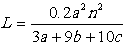
The archived formula image uses a diameter-based multilayer approximation: L ≈ 0.2a²N² / (3a + 9b + 10c), with a the mean diameter, b the winding length, and c the radial winding depth, all in inches, and L in microhenries. Do not substitute radius for diameter or mix inches with millimetres.
Original archive figures
CLICK TO ENLARGE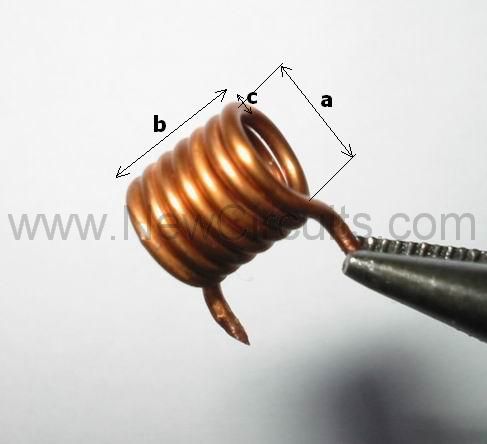

On the bench
The archive calls this a single-layer formula despite including winding depth. Treat its geometry and worked example as material for review; measure a finished coil and account for self resonance when using it at RF.
Resources & provenance
Rewritten from the original articles/tut/d3mn6sf_tut001.php page. Component values and historical performance claims have not been independently bench-tested.
Browse all surviving downloads →