How it works
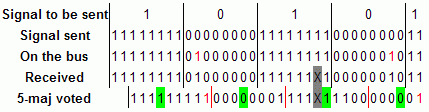
FlexRay is an automotive communication protocol that combines a scheduled static segment with a dynamic segment. The schedule allows nodes to exchange time-critical data in defined slots, while the dynamic segment accommodates a different traffic pattern.
Clock synchronization is central: nodes must agree closely enough on the communication cycle for their assigned slots to remain meaningful. Hardware controllers handle the detailed encoding, timing, and error processing.
The old article described FlexRay as a future protocol and predicted vehicle launches. Those statements are retained only as historical context, not as current news.
Original archive figures
CLICK TO ENLARGEOn the bench
This overview explains the architecture; it does not replace the controller documentation or the protocol specification when designing an interface.
Resources & provenance
Rewritten from the original articles/tut/d3mn6sf_tut005.php page. Component values and historical performance claims have not been independently bench-tested.
Browse all surviving downloads →